christmas
Digital vs Paper Christmas Cards in 2026: The Honest Comparison
Published 19 August 2026
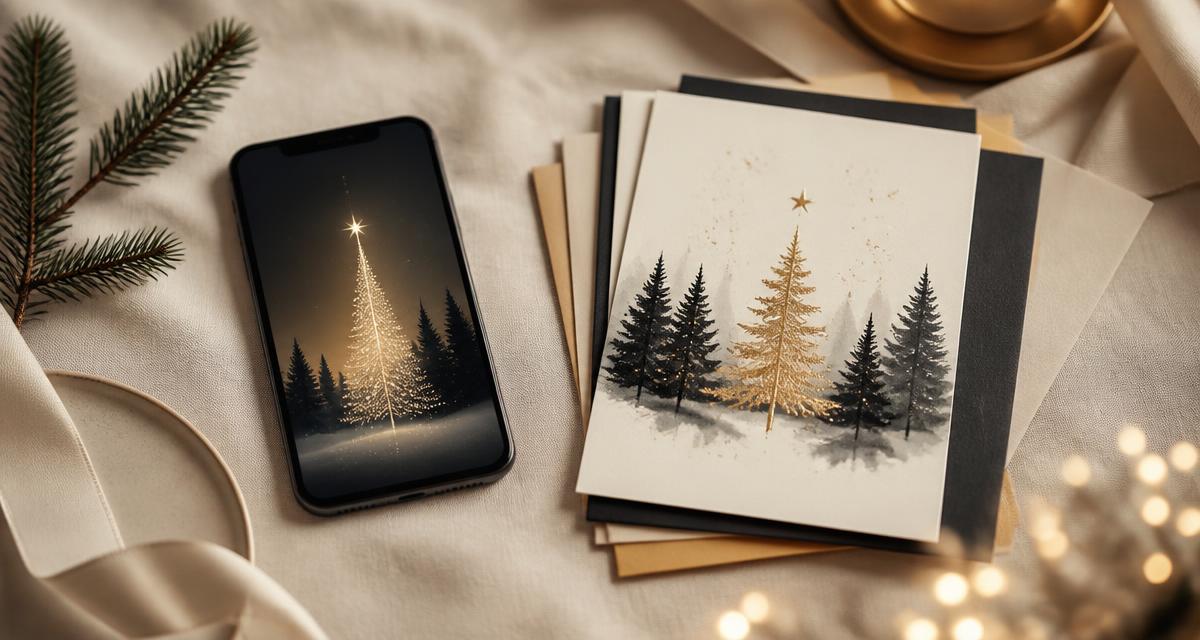
Christmas cards have been at a quiet turning point for several years now, and in 2026 the maths is finally clear. Paper still has a place. Digital is no longer the second-best option. The right approach for most households is to mix the two — paper for the people who treasure the object, digital for everyone else — and stop apologising for either format. This is the honest comparison, side by side, with no pretending that one wins on every front.
Why this comparison is different from the usual one
Most "digital vs paper" articles still treat digital as a budget alternative — a cheap, low-effort fallback. That is no longer accurate. Modern digital cards — particularly musical greeting cards — can carry photos, recorded voice messages, video and a personalised song. They are not a downgrade. They do different jobs from paper, and the question worth asking is which job each recipient needs.
Round-by-round comparison
1. Cost
A premium paper card costs roughly the same as a single digital musical greeting card — but the digital one includes music, photos and voice. Once you add postage to a list of fifty, paper becomes meaningfully more expensive. Digital wins on scale; paper holds its own for one-off premium cards.
2. Personalisation
Paper is limited to what you can write by hand inside the card. Digital can carry photos of the recipient, a voice message from each family member, a backing song, and even a personalised song with the recipient name in the lyrics. For personal content, digital wins by a wide margin.
3. Reach and timing
Paper requires three weeks for international post and around a fortnight for reliable domestic delivery. Digital arrives in seconds, anywhere in the world, on any day including Christmas itself. For long-distance family and last-minute sending, digital wins by a margin that has only grown.
4. Keepsake value
Paper has the long-standing advantage of being a physical object that can sit on the mantelpiece for the season and be stored in a box afterwards. Digital cards can be saved as files, replayed and even printed — but the default behaviour is in-the-inbox. For households who treasure a visible display, paper still leads here.
5. Environmental impact
Paper Christmas cards use card stock, ink, envelopes, and transport. Digital uses electricity for storage and delivery. On any reasonable accounting, digital has a meaningfully smaller footprint per card — particularly when the paper card is shipped internationally. For eco-conscious households, see our companion guide to eco-friendly Christmas cards in Australia.
6. Ease for the recipient
Paper requires nothing. Digital requires opening a link, which most recipients manage easily but some older relatives prefer to be walked through. A simple text message — "tap this to open your card" — solves it. Both formats are easy in practice; paper just has no learning curve.
7. The "felt" element
Paper carries a small, real sense of effort because someone wrote in it and posted it. Digital can match that — sometimes exceed it — when it includes a recorded voice message or a personalised song, because those things genuinely could not exist without the sender. The "felt" element is now a matter of what you put inside the format, not the format itself.
Which format wins for which recipient
- Inner circle (parents, siblings, oldest friends) — paper card with a handwritten message, ideally paired with a digital musical card or personalised song for the personal weight.
- Long-distance family and friends overseas — digital musical greeting card, sent by link, with photos and a voice message. See our guide to long-distance Christmas gifts.
- Extended family and outer circle — digital, all the way. Shared link to a single musical greeting card customised once.
- Colleagues and clients — digital for the company-wide message; paper for the inner client circle if budget allows. Better tone matching than picking one format for everyone.
- Grandparents — both. Paper for the keepsake, digital musical card for the photos and the grandchildren''s voices.
- Bereaved or grieving recipients — quiet, simple paper card with a personal handwritten line. Avoid the louder digital formats here.
The hybrid approach most households use now
The clearest pattern in 2026 households is a tiered list. Paper for the ten or twenty people who matter most. Digital musical cards for the next sixty. A single personalised song or digital card sent to the inner circle on Christmas morning to carry the personal weight. This combination costs less than fifty paper cards, reaches further, and lands harder.
The format checklist
- Is the recipient overseas? (Digital almost always wins.)
- Do they treasure displayable keepsakes? (Paper wins.)
- Do you want to include photos, voice messages or a song? (Digital only.)
- Is the list larger than thirty people? (Digital wins on cost and effort.)
- Is the recipient grieving or going through a difficult Christmas? (Paper, quiet, simple.)
Closing thought
The honest answer to "digital or paper?" in 2026 is "both, on purpose". Paper still has a place for the keepsake recipients and the inner circle. Digital wins for reach, cost, personalisation and the personal layer that paper structurally cannot carry. If you want to add a digital piece to your list this year — a musical greeting card or a personalised song — most can be created in under thirty minutes and delivered the same day. See the formats on our pricing page.
Frequently Asked Questions
Are digital Christmas cards better than paper ones?
For long-distance family, last-minute sending and personal content like voice messages and photos — yes. For older relatives who treasure something to hold and for displayable keepsakes, paper still wins. Most households now use both, with paper for the inner circle and digital for everyone else.
Are digital Christmas cards considered impersonal?
Done well, the opposite. Digital musical greeting cards can carry photos, voice messages and a personalised song — things paper cards cannot do at all. The format only feels impersonal when no personalisation is added; with names, voices and photos it consistently outperforms generic shop-bought paper cards.
How much cheaper is a digital Christmas card than a paper one?
A typical digital greeting card sits around the cost of a single premium paper card and includes music, photos and voice. Once you add postage to fifty paper cards, digital becomes meaningfully cheaper at scale — and effectively free for long-distance recipients where postage would otherwise dominate.
Do digital Christmas cards work for grandparents?
Yes — they open from a link in any web browser with no app or account required. Pair the link with a short text or email to make it clear how to open. Many grandparents save and replay them, especially when the card contains photos and voices from the grandchildren.
What is the best of both worlds — digital or paper Christmas cards?
Send paper cards to the inner circle and digital musical cards to everyone else. The paper carries the tradition; the digital carries the personal weight. Most households save effort and improve the gift at the same time by mixing the two.